
Department of Applied Science & Humanities
Department Overview
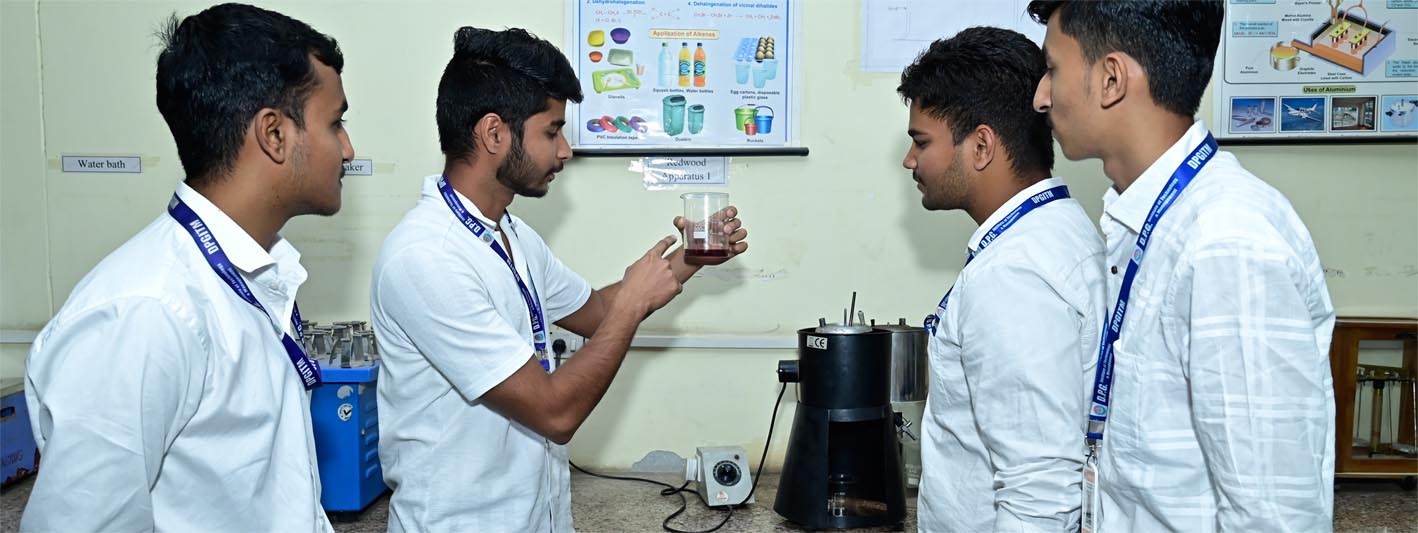
Engineering Physics, Engineering Chemistry and Engineering Mathematics have a very special place in the curriculum of engineering undergraduates of all branches. The Department of Applied Science and Humanities consist of Mathematics, Physics, Chemistry, Environmental Studies, English, Economics and Management.
Department has very good Language Lab to improve Communication skills of the students.
The Department has following well-developed and well equipped with several sophisticated instruments
- Engineering Chemistry Lab
- Physics Lab
- Digital Language Lab
- English Communication Lab
Courses Available
Courses in DPGITM is affiliated to Maharishi Dayanand University, Rohtak and approved by AICTE, New Delhi. The following courses are available
- B.Tech.
- Computer Science and Engineering
- Data Science
- AIML
- Mechanical
- Civil
- Electrical
- Electronics and Communication Engineering
- BBA
- BCA
- M.Tech
Faculty

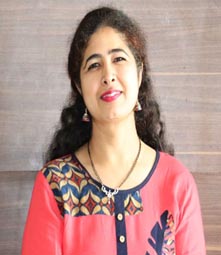
Dr. Simpi Mehta (Head of the Department)
Assistant Professor
Dr. Simpi Mehta
- Qualification: Ph.D.(Organic Chemistry), M.Sc.(Organic Chemistry)
- Experience: 20 years
- Workshop/FDP/STP: 10
- Research Papers ( Journal/Conference/Seminar): 5
- Book Chapter: 3
- Course taught: B.Tech., B.Sc.
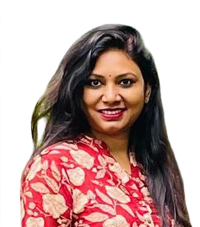
Dr. Rimmi
Assistant Professor
Dr. Rimmi
- Qualification: Ph.D.: Environmental Science, M.Sc.: Environmental Science
- Experience: 4 years
- Workshop/FDP/STP: 7
- Research Papers ( Journal/Conference/Seminar): 5
- Book Chapter: 5, Book: 1
- Course taught: B.Tech., BBA, BCA.

Mr. Avikshit Sharma
Assistant Professor
Mr. Avikshit Sharma
- Qualification: Ph.D. (Pursuing), M.Phil.: Statistics, M.Sc.: Mathematical Statistics
- Subject: Mathematics
- Experience: 21 years
- Workshop/Seminar: 15
- Course taught: B.Tech., BBA, BCA.
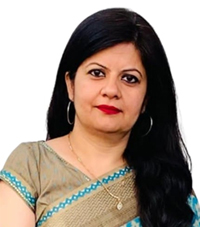
Dr. Leena Sharma
Assistant Professor
Dr. Leena Sharma
- Qualification: Ph. D. (Pursuing), M. Phil.: Mathematics, M.Sc. in Mathematics, M.Ed. (Master of Education)
- Subject: Mathematics
- Experience: 15 years
- Workshop/FDP/Seminar: 2
- Research Papers: 6
- Course taught: B.Tech., BBA, BCA.
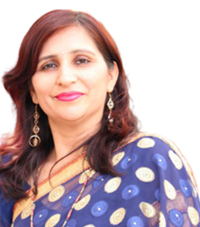
Dr. Ritu Bhatia
Assistant Professor
Dr. Ritu Bhatia
- Qualification: Ph.D. in Mathematics, M.Phil., M.Sc. in Mathematics
- Subject: Mathematics
- Experience: 17 years
- Research Papers: 5
- Workshop/Seminar/FDP: 10
- Course taught: B.Tech., BBA, BCA, B.Sc., M.Sc.
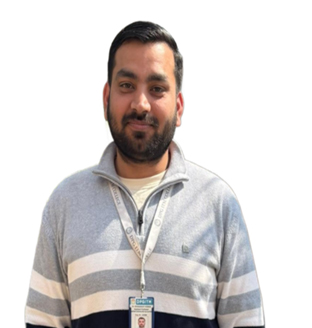
Dr. Dhananjay Verma
Assistant Professor
Dr. Dhananjay Verma
- Qualification: Ph.D. in Plasma Physics, M.Sc. In Physics (Specialization in Electronics), B.Sc., NET
- Subject: Physics
- Teaching Experience: 1 Year
- Publication: 4
- Conferences/Seminars: 7
- Awards: JRF & SRF, RSTA
- Research Area: Plasma Physics, Electronic Propulsion Devices, Plasma-Material Interactions, and Plasma Instabilities
- Courses Taught: Semiconductor Physics, Oscillation, Waves & Optics, Physics of Materials, and Universal Human Values to B.Tech. and Material Science to M.Sc. Courses.
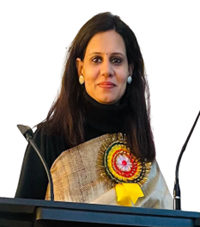
Dr. Nisha Chaudhary
Assistant Professor
Dr. Nisha Chaudhary
- Qualification: Ph.D., B.Sc. & M.Sc.: Physics
- Subject: Physics
- Experience: 3 years
- Research Papers: 2
- Workshop/Seminar/FDP: 3
- Course taught: B. Tech., BCA
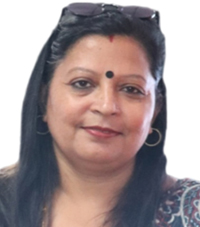
Ms. Vandana Kaushik
Assistant Professor
Ms. Vandana Kaushik
- Qualification: Ph. D. (Pursuing), M. Phil.: English, M.A.: English
- Subject: English
- Experience: 18+ years
- Workshop/Seminar: 10
- Course taught: B.Tech., BBA, MBA, BCA
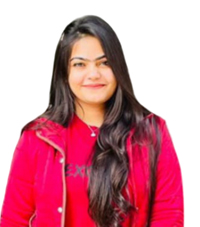
Ms. Kritika
Assistant Professor
Ms. Kritika
- Qualification: M.A.: English
- Subject: English
- Experience: 2 years
- Course taught: B.Tech., BBA, MBA, BCA
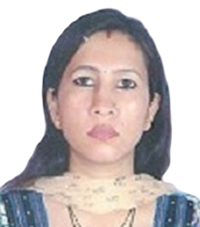
Ms. Mamta Devi
Assistant Professor
Ms. Mamta Devi
- Qualification: Ph.D. (Pursuing), M.Tech. in EVS
- Subject: Environmental Science
- Experience: 6 years
- Research Papers: 2
- Workshop/Seminar/FDP: 2
- Course taught: B. Tech.
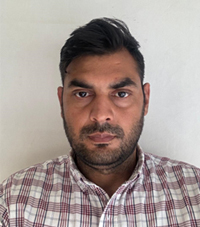
Mr. Hardeep Singh
Assistant Professor
Mr. Hardeep Singh
- Qualification: B.Tech. Computer Science, M.Sc.(Mathematics)
- Subject: Mathematics
- Experience: 5 years
- Course taught: BCA, BBA.
Vision & Mission
Vision
Department of Applied science and humanities at DPG ITM has the vision to nurture and inculcate knowledge and understanding of engineering sciences and groom the students with intellectual and professional strength. Preparing sincere and responsible students to thrive and contribute to an ever- changing global society.
Mission
- To enhance the knowledge of Applied Science and Humanities which are fundamentally correlated to various branches of engineering and technology.
- To teach moral and sense of social responsibility to the upcoming engineers of the society
- To motivate students to think in a new way and apply new ideas of research in fundamental science and technology
PEOs and PO’s
Programme Educational Objectives (PEOs)
Fundamental Knowledge: Students will be taught the fundamental concepts of basic sciences necessary in industry, engineering practices as well as advanced study.
Design Skills: Students will be prepared with problem solving skills, laboratory skills, and design skills for solving career related problems.
Professional Skills: Students will be prepared as an effective team member with good communication skill, teamwork skills and an ethical behaviour necessary to ace in their careers.
Specialization: Students will be prepared to pursue their career in respective branches of engineering and related interdisciplinary fields with a strong background in applied sciences and engineering.
Self-Learning: Students will be prepared such that they will continue their profession with a habit of continuous learning and self-development through library resources, professional societies, journals, meetings, conferences, seminars, workshops, expert talks, industry interactions, etc.
Sustainability: Students will be prepared to keep pace with the ever changing scenario of the industry.
PROGRAM OUTCOMES (POs)
- Students will have knowledge of advance mathematics, physics, chemistry, software programming, drawing and design, manufacturing processes and communication skills.
- Students will design and conduct experiments, as well as analyse and interpret data.
- Students will design processes within realistic constraints such as economic, environmental, health and safety.
- Students will work in multi-disciplinary teams to analyse and solve technical problems.
- Students will identify, formulate and evaluate engineering problems.
- Students will understand professional and ethical responsibility in practice always.
- Students will communicate effectively using oral, written and graphic forms.
- Students will have a broader perspective necessary to understand the global and social impact of basic sciences.
Labs. & Infrastructure
ENGINEERING PHYSICS LAB
The physics lab basically consists of four labs (Electromagnetic Theory lab, Semiconductor Lab, Mechanics lab and Optics Lab) for various branches of first year as per MDU G Scheme Syllabus. The lab is equipped with facilities for the group of 30 students to carry out experiments independently. The lab is well-equipped and enables students to understand the fundamentals of Engineering Physics.
Major Equipment in Engineering Physics Lab are
Hall Effect experiment, Dielectric constant experiment, PN diode kit, Zener Diode kit with voltage regulator, Planks Constant Apparatus, Solar cell apparatus, Newton’s ring experiment, Diffraction Grating, Michelson Interferometer, He-Ne Laser, Air track experiments, Bar Pendulum, Spring constant experiment, Maxwell’s needle, Torsion Pendulum and Sextent.
ENGINEERING CHEMISTRY LAB
The Engineering Chemistry Lab has a wide range of equipment as per the latest G scheme syllabus of MDU. The lab is aptly prepared to impart education in Chemistry in a neatly designed, spacious and well-ventilated laboratory with a capacity to accommodate 30 students. The lab is aesthetically designed with Marble slabs, separate basins and dedicated space to keep all the salts and chemicals. It provides students with a practical approach towards the various techniques used in engineering application. Practical awareness is inculcated and students are trained both quantitatively and qualitatively during the lab sessions so that their understanding and problem solving abilities can be enhanced.
Major Equipment in Engineering Chemistry Lab are
UV-Spectrophotometer, Digital Conductivity Meters, Flame Photometer, Redwood Viscometers, Pensky Marten’s Flash & Fire Point Apparatus, Electrical Balance, Distillation Unit, Digital pH Meters etc.
Employment Opportunities
Coming Soon
Department Activities
| Title | Download |
|---|---|
| Introduction to Mathmatica | Download |
| A guidance program on career opportunities after BE/B.Tech | Download |
| Department Events | View Events |
Clubs
| Title | Events |
|---|---|
| Youth and Biosphere Club | View Events |
Syllabus and Scheme of Study
Previous Year’s Question Papers
Business Mathematics
| Title | Download |
|---|---|
| BBA 1st Sem Dec 2022 | Download |
| BBA 1st Sem Feb 2022 | Download |
| BBA 1st Sem Mar 2021 | Download |
Applied Computational Statistics
| Title | Download |
|---|---|
| B.Tech 3rd Sem Dec 2022 | Download |
Chemistry I
| Title | Download |
|---|---|
| B.Tech 1st Sem Dec 2018 | Download |
| B.Tech 1st Sem Feb 2022 | Download |
| B.Tech 2nd Sem May 2023 | Download |
English
| Title | Download |
|---|---|
| B.Tech 1st Sem Dec 2022 | Download |
| B.Tech 1st Sem Feb 2022 | Download |
| B.Tech 2nd Sem Mar 2021 | Download |
Mathematics III
| Title | Download |
|---|---|
| B.Tech 3rd Sem Dec 2019 | Download |
| B.Tech 3rd Sem Mar 2021 | Download |
| B.Tech 3rd Sem Mar 2022 | Download |
Mathematics III
| Title | Download |
|---|---|
| B.Tech 3rd Sem Apr 2021 | Download |
| B.Tech 3rd Sem Dec 2019 | Download |
| B.Tech 3rd Sem Dec 2022 | Download |
| B.Tech 3rd Sem Mar 2021 | Download |
Introduction to Electromagnetic Theory
Mechanics
| Title | Download |
|---|---|
| B.Tech 1st Sem Dec 2018 | Download |
| B.Tech 1st Sem Dec 2019 | Download |
| B.Tech 1st Sem Mar 2021 | Download |
| B.Tech 1st Sem Feb 2022 | Download |
Semiconductor Physics
| Title | Download |
|---|---|
| B.Tech 1st Sem Dec 2019 | Download |
| B.Tech 1st Sem Mar 2021 | Download |
| B.Tech 1st Sem Feb 2022 | Download |
Optics and Waves
| Title | Download |
|---|---|
| B.Tech 3rd Sem Feb 2022 | Download |
Departmental Magazine
| Title | Download |
|---|---|
| Lab to Life Departmental Magazine | Download |